The ILRI 2019 Annual Report> The right policies
Social equity in low-emissions development in the East African dairy sector

Low-emission dairy practices have significant implications for women’s labour, control of resources and access to financial benefits
By Sarah Kasyoka
Livestock emit significantly less greenhouse gas (GHG) emissions than transport, energy and other sectors but account for half of the total emissions within the agricultural sector. Forty per cent of these emissions are from enteric fermentation (digestive processes that decompose and ferment feed), while another 25% is from manure management. As a result, in the context of the current climate crisis discussions, the reduction of GHG emissions from livestock has generated intense interest from researchers, development practitioners and policymakers alike.
That interest has spurred concerted efforts towards ensuring that farmers in Africa participate in climate-smart solutions by taking advantage of huge opportunities to improve livestock productivity while minimizing negative impacts on the environment. Specifically, the dairy sector in East Africa has been targeted as a potential industry to implement climate-smart initiatives which can significantly lower GHG emissions.
Reducing GHG emissions from livestock has generated intense interest from researchers, development practitioners and policymakers alike
Researchers at the International Livestock Research Institute (ILRI) have been making contributions to the global efforts to respond to the increasing global demand for livestock products, including milk, through smallholder and medium farms, while lowering GHG emissions. Studies have examined the potential of various low emissions development (LED) options to reduce the emissions per unit of animal protein produced.
Since lowering livestock’s GHG emissions intensity is directly linked to changing farm practices, the LED interventions mostly fall under three major categories: feed quality and availability, manure management and animal husbandry. These options are often assessed in terms of their suitability for specific farming systems, their technical potential, the barriers that exist to their adoption and the potential incentives that could encourage their use among farmers.
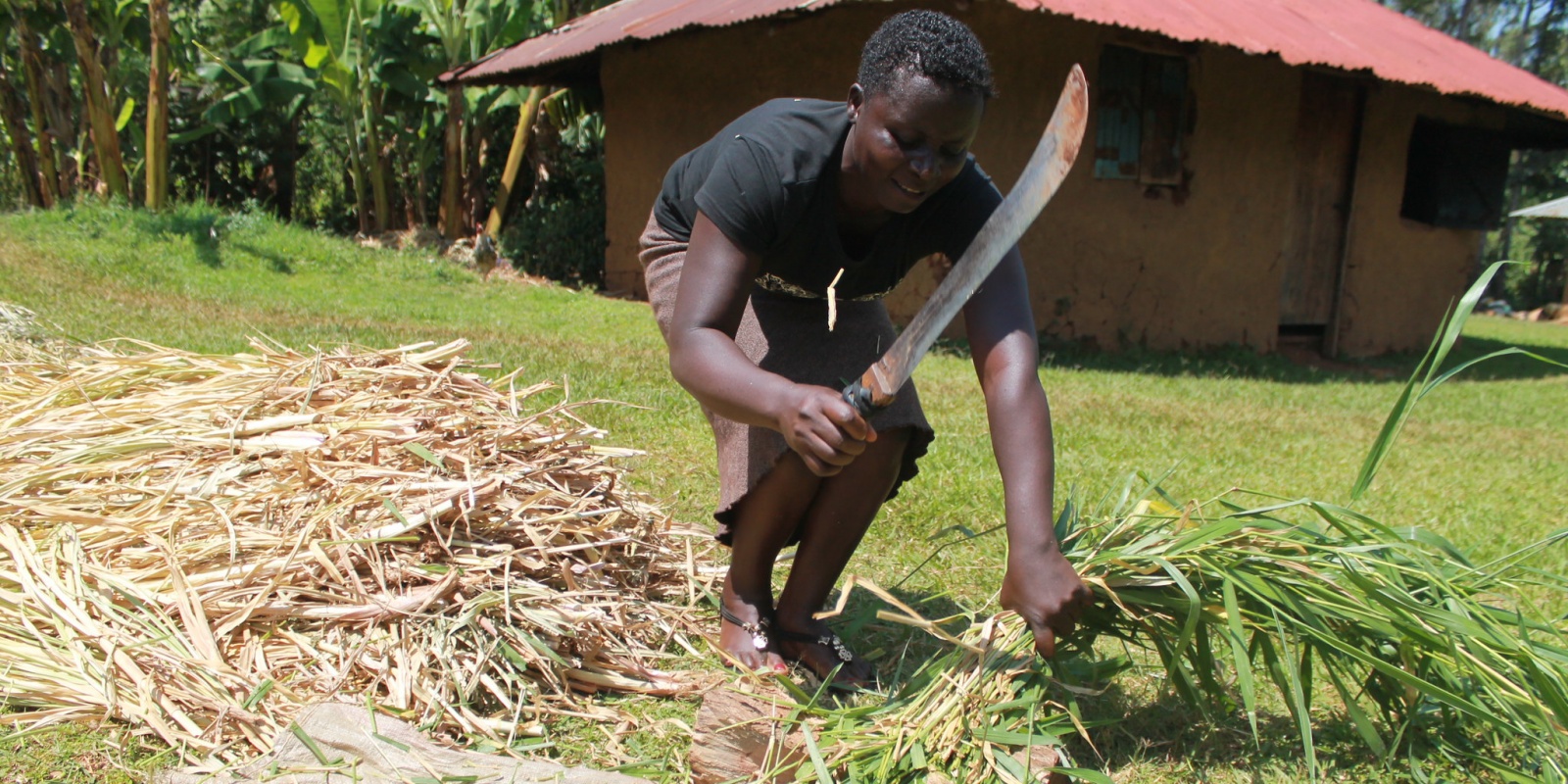
However, most low-emissions research and interventions only focus on environmental and productivity outcomes but ignore the social distribution of impacts and benefits of their uptake. In most dairy production settings in East Africa, there exists a clear gender division of labour: men and women have different responsibilities and enjoy different benefits from livestock. Research has shown that women are predominately responsible for the daily and time-consuming tasks related to the management of cows. They secure fodder for the animals, remove their manure, provide them with water, assess and take care of their health needs, determine whether they are in heat and require mating or artificial insemination and, of course, milk them. These tasks can easily take six hours a day.

Men’s tasks tend to be more ‘seasonally needs-based’ or sporadic. They include purchasing and selling cows, spraying them against ticks and planting fodder crops, as ILRI social scientists Katie Tavenner and Todd Crane note. And although women contribute intense labour to dairy production, they are often less privileged when it comes to cattle ownership. The don’t benefit from the income from milk sales or participate in decision-making regarding the purchase and sale of animals.
Finally, while participation in the dairy sector is a viable means of improving rural livelihoods, the opportunities available to men and women for entering the sector are often different. Cultural norms favour men in terms of accessing the benefits of dairy farming through formal participation in milk markets. Women frequently face barriers in participating in the dairy value chain and in the potential to accrue benefits from such participation.
These gender dynamics have a significant role in the adoption of low emission development strategies in the dairy sector and must be taken into account. Otherwise, interventions meant to encourage the adoption of low-emission practices can end up, inadvertently, harming or disenfranchising women.
In most dairy production settings in East Africa, there exists a clear gender division of labour: Men and women have different responsibilities and enjoy different benefits from livestock
It is common for farmers to be more concerned with enhancing productivity and profitability than with the environmental impacts of their practices. They need an incentive to participate in low emissions development initiatives. These initiatives need to be employed carefully to avoid increasing men’s control over productive resources and monetary benefits to the detriment of women.
ILRI researchers have studied the gender norms and intra-household dynamics that influence women’s participation in low emissions development interventions, exploring specific options that can encourage their participation. Their research recommends engaging with smallholders regarding gender roles and equity in order to customize incentives for women’s participation in LED interventions to ensure that they are culturally sensitive and reflect day-to-day realities.
Ultimately, if the goal of lowering livestock’s GHG emissions intensity is to be achieved, the dynamic practices in smallholder households such as division of labour, resource control and decision-making power must be part of the equation. Both men and women need to be engaged in assessing the viability of LED initiatives in terms of their implications on social equity.