

_0.JPG)
The International Livestock Research Institute (ILRI) in collaboration with CowTribe and CARE International are testing innovative approaches to vaccine delivery that benefits women in Ghana.
The ‘Transforming the vaccine delivery system in Ghana: identifying approaches that benefit women’ project tests two innovative approaches for vaccine delivery — one gender accommodative and one gender transformative — by adapting CARE’s Gender Transformative Farmer Field and Business School approach to facilitating women’s sustained involvement in livestock vaccination. Both approaches address the practical barriers to access, as well as the gender-based barriers such as gender norms on decision-making and women’s mobility.
This project is expected to improved livelihoods and gender equality in poor rural households and those in remote communities through increased household income, food security and greater influence of women arising from improved access to animal health services for higher livestock productivity.
The project will also generate knowledge on technical, physical (mobility), and socio-economic factors (access to credit, beliefs, and norms) and how these interplay to affect the adoption of vaccines.
It will also make important contributions to the global discourse on the holistic and quantifiable measurement of women’s empowerment in the agriculture system.
Its work will also increase awareness among vaccine service providers of men’s and women’s distinct roles in the vaccine distribution chains and it will improve their capacities to expand vaccine campaigns.
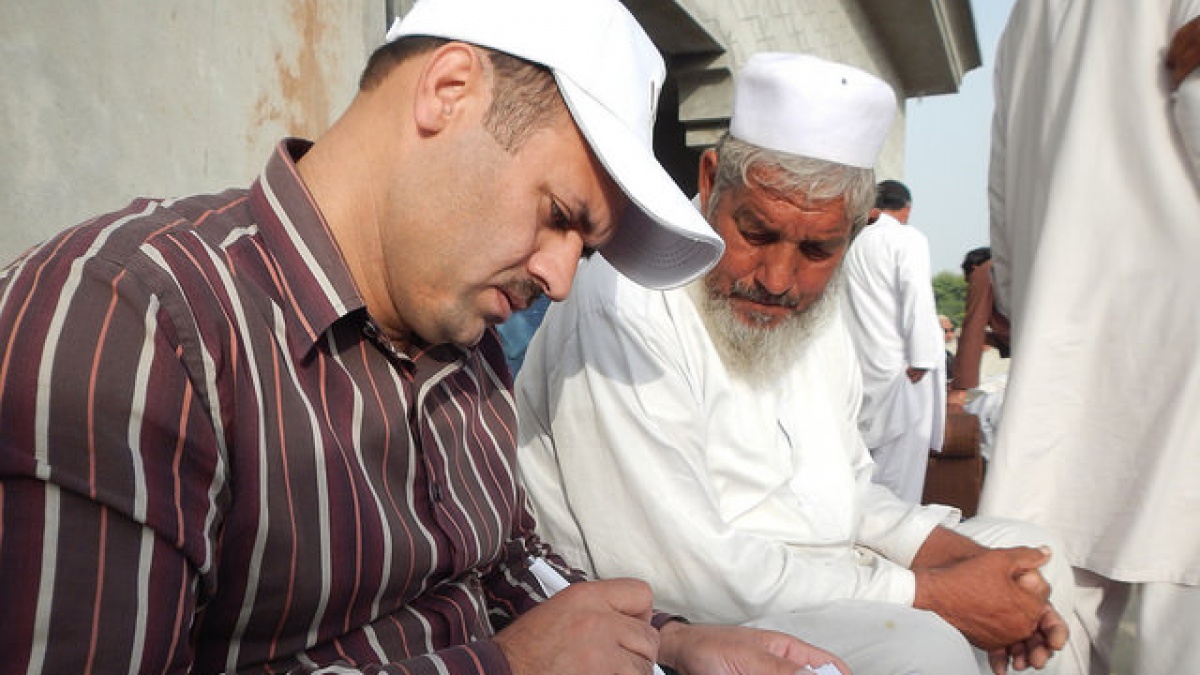
In a recently published blog by the ILRI gender team on Agrilinks, researchers are working with households, including male and female farmers, in the Bawku West and Pusiga districts of Ghana.
Peter Awin, a co-founder of CowTribe, knows the importance of inclusive and equitable vaccine access. "We want to ensure that no farmer in Ghana is denied access to good-quality and reliable healthcare for the animal they depend on for a livelihood. And we mean any farmer; man or woman,"he said. Delivery of animal vaccines through drones is one way of reaching farmers from remote areas (otherwise difficult to reach)promptly (a few hours rather than weeks) and at a lower cost(drone-delivered vaccines are 25 percent cheaper). This facilitates the access and affordability of chicken and goat vaccines for women farmers.
Read about the project in ILRI's 2019 Annual Report
Listen to a podcast about the project:


Participate